“If we are to preserve culture, we must continue to create it.”
— Johan Huizinga
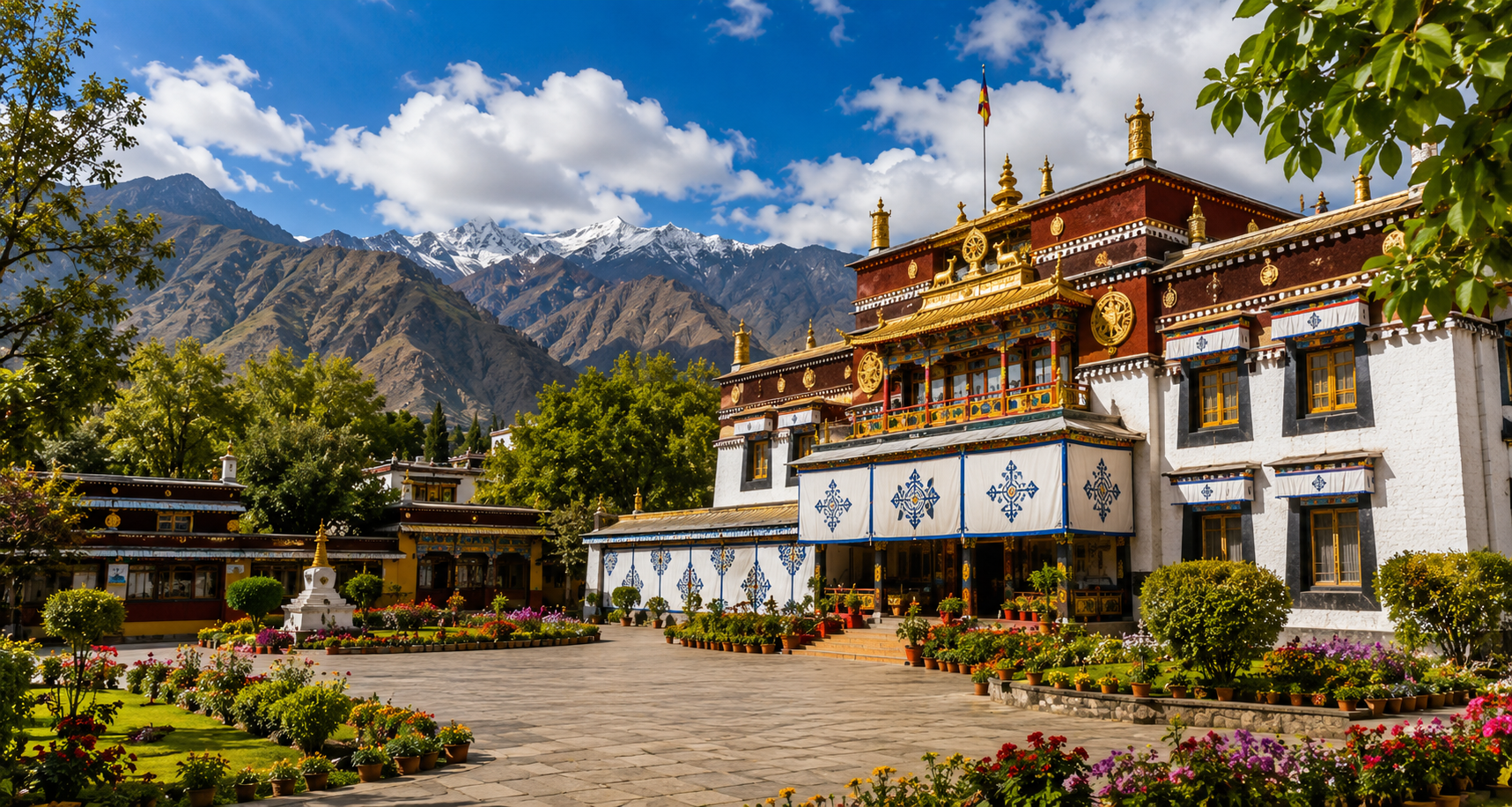
Nestled in the peaceful surroundings of Dharamshala, the Norbulingka Institute stands as one of India’s most inspiring centers dedicated to preserving Tibetan culture, art, and traditions.
Established in 1995, the institute was founded with a single vision—to ensure that the rich heritage of Tibet is preserved, practiced, and passed on to future generations.
For travelers exploring Dharamshala and McLeod Ganj, Norbulingka offers much more than a tourist attraction. It provides an opportunity to experience authentic Tibetan culture, architecture, craftsmanship, and spirituality in one beautiful destination.
Travel Tip
Set aside at least 2–3 hours to explore the monastery, workshops, gardens, cafés, and artisan stores at a relaxed pace.
About Norbulingka Institute
The Norbulingka Institute was created to preserve Tibetan culture after many traditional art forms faced the risk of disappearing.
Today, it serves as a center where artists, craftsmen, scholars, and students continue practicing centuries-old traditions while sharing them with visitors from around the world.
The name “Norbulingka” translates to “The Jewel Garden”, perfectly reflecting the peaceful atmosphere created by its beautifully maintained gardens and tranquil surroundings.
Temple Architecture
The monastery has been constructed entirely in the traditional Tibetan architectural style.
Its unique layout follows the sacred proportions of Avalokiteshvara, the Bodhisattva of Compassion, who is traditionally depicted with a thousand arms.
The Temple represents the Head.
The Workshops and Offices symbolize the Thousand Arms.
The Water Pond represents the Heart.
The flowing waterways connect every section of the complex.
Inside the temple stands a magnificent 14-foot-tall Buddha statue, handcrafted using hand-hammered copper sheets by skilled Tibetan artisans.
Traditional Tibetan Art Forms
Norbulingka is not only a monastery—it is also one of the finest centers for preserving traditional Tibetan craftsmanship.
Visitors can witness artisans creating beautiful handmade works using techniques that have been passed down through generations.
Statue Making
Wood Carving
Thangka Painting
Thangka Appliqué
Traditional Wood Painting
Tailoring
Weaving
Core Values of the Institute
While interacting with the staff, one of the most inspiring aspects of Norbulingka was its unwavering commitment to preserving Tibetan identity and culture.
The Institute Focuses On:
Continuing Tibetan Heritage
Design, Quality & Tradition
Community & Sustainability
Scholastic Education
Social Awareness Programs
Students who demonstrate passion and dedication are trained free of cost, ensuring that traditional skills continue to thrive for future generations.
Supporting the Mission
One of the most remarkable aspects of Norbulingka is its sustainable model.
The guesthouses, cafés, restaurants, and artisan shops within the institute help generate income that directly supports the preservation of Tibetan culture and the education of future artists.
Visitors don’t necessarily need to donate money. Simply purchasing handcrafted products or enjoying a meal at the institute contributes to its meaningful mission.
Did You Know?
The institute received its initial support from His Holiness the 14th Dalai Lama, who guided and oversaw its development until 2015, further strengthening its authenticity and purpose.
A Place of Harmony
Unlike many monasteries, Norbulingka is surrounded by beautifully landscaped gardens, peaceful ponds, flowing streams, and colorful flowers.
The environment reflects one of Buddhism’s central teachings—the harmonious coexistence of people, animals, and nature.
Walking through its peaceful pathways is as spiritually rewarding as visiting the temple itself.
Enjoy peaceful gardens and traditional surroundings.
Support local artists through ethical shopping.
Taste authentic Tibetan food and handmade delicacies.
Learn about Tibetan culture and Buddhist philosophy.
Final Thoughts
Norbulingka is far more than a monastery—it’s a living museum dedicated to preserving one of the world’s richest cultural traditions.
Whether you visit for its peaceful atmosphere, remarkable craftsmanship, spiritual significance, or beautiful gardens, you’ll leave with a deeper appreciation for Tibetan heritage.
If your journey takes you to Dharamshala or McLeod Ganj, Norbulingka deserves a place at the very top of your itinerary.
Discover the Jewel Garden
Experience timeless Tibetan culture, breathtaking craftsmanship, peaceful gardens, and spiritual serenity at one of Dharamshala’s most remarkable destinations.